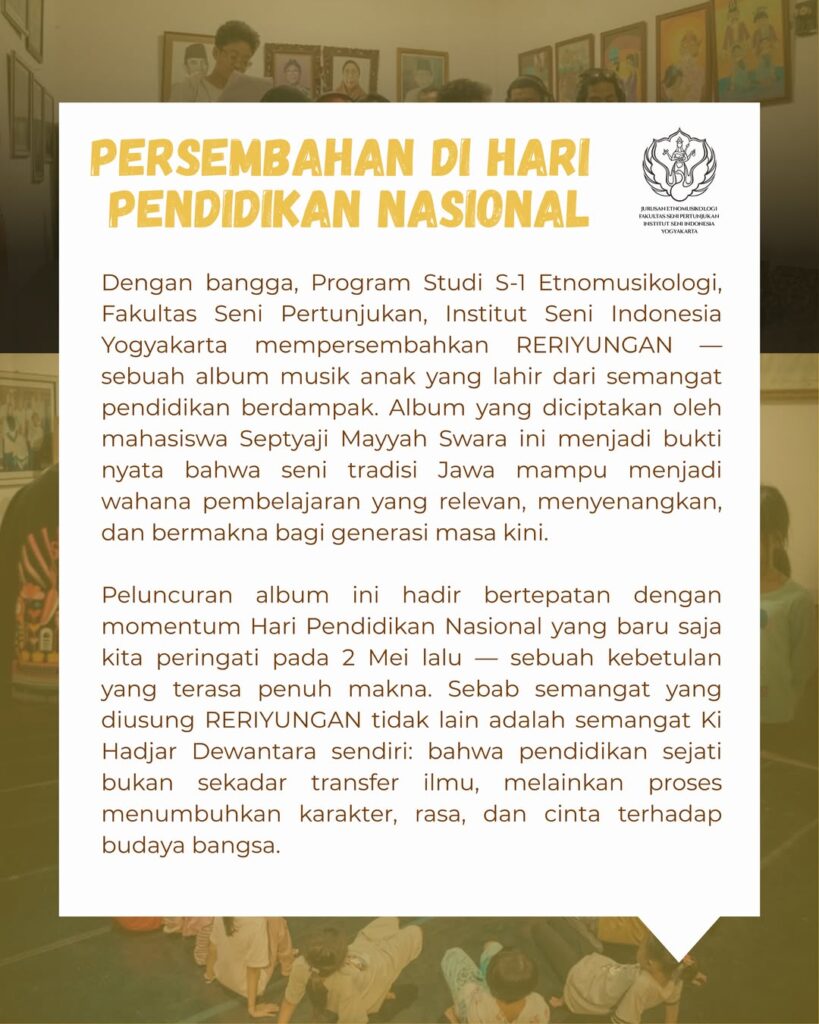


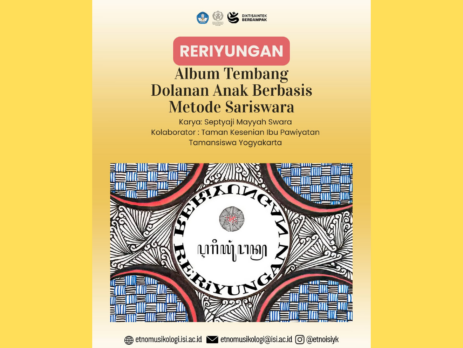
Yogyakarta, May 7, 2026 — The Undergraduate Ethnomusicology Study Program, Faculty of Performing Arts, Indonesian Institute of the Arts (ISI) Yogyakarta presents “Reriyungan,” an album of children's traditional songs based on the Sariswara Method by student Septyaji Mayyah Swara. This work will be launched through a Mini Concert & Album Launch event on Friday, May 8, 2026, at 7:30 PM Western Indonesian Time, in collaboration with the Ibu Pawiyatan Tamansiswa Art Park Yogyakarta.
“Reriyungan” is a tangible manifestation of how the work of ISI Yogyakarta students goes beyond being just a final project or artistic composition, but evolves into a product of knowledge, an educational medium, and a cultural practice that can be more widely utilized by the community. This album is designed as a children's play song rooted in Javanese tradition, yet presented with a fresh and relevant musical approach for current generations.
Rector of ISI Yogyakarta, Dr. Irwandi, S.Sn., M.Sn., stated that the release of the album “Reriyungan” demonstrates the power of art education in responding to the needs of the times. According to him, art higher education institutions have a responsibility to present works that are not only aesthetically pleasing but also make a real contribution to character building, cultural strengthening, and community education.
“Works like ‘Reriyungan’ show that art has a very strong vitality in education. ISI Yogyakarta continues to encourage students not only to be creators, but also thinkers, researchers, and cultural agents who can bring impact to society,” said the Rector.
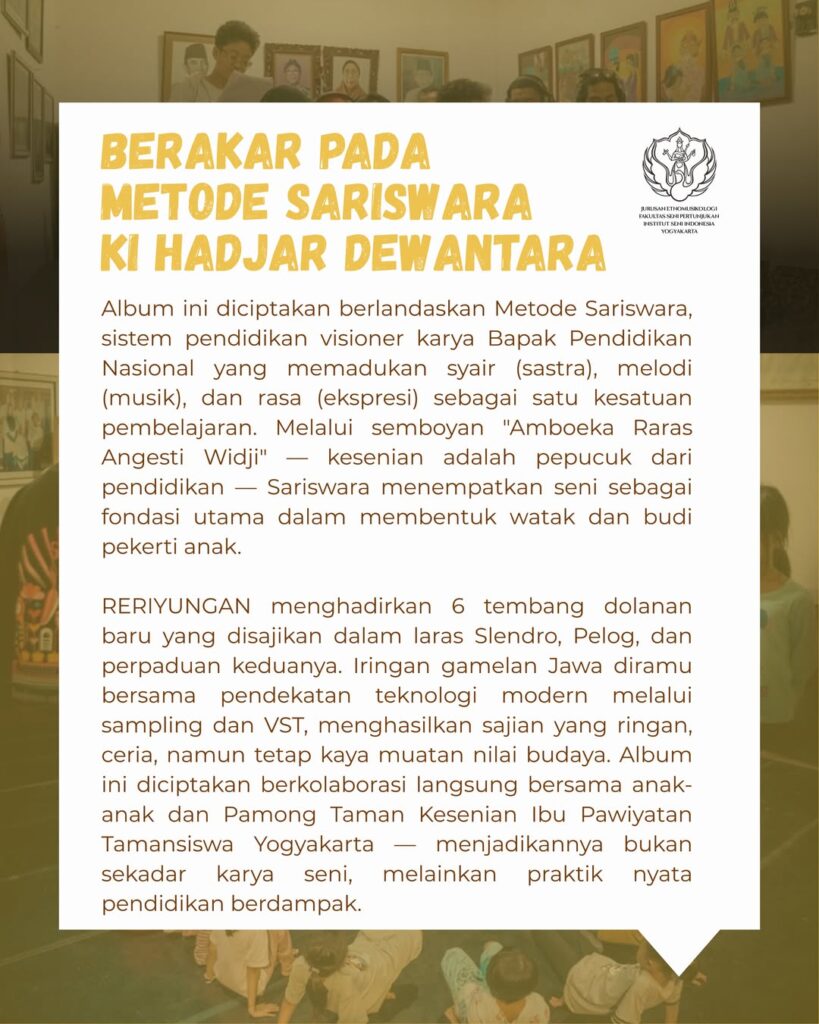
This album was developed based on the Sariswara Method of Ki Hadjar Dewantara, an educational approach that integrates literature, music, and emotion as a unified learning experience. Through the motto “Amboeka Raras Angesti Widji,” which means art as the spearhead of education, Sariswara places art as a path to shape character, good conduct, emotional sensitivity, and children's love for their national culture.
“Reriyungan” presents six new children's songs presented in the slendro, pelog, and a combination of both tunings. The Javanese gamelan accompaniment is blended with a modern music technology approach through sampling and VST, resulting in a presentation that is light, cheerful, and communicative, yet still possesses strong cultural value roots.
This work also serves as an implementation of Applied Ethnomusicology, which is the application of ethnomusicology in community life. In this context, music is not only understood as an object of study or performance, but also as a medium for education, empowerment, and the inheritance of cultural values. Through “Reriyungan,” tembang dolanan (traditional children's songs) are brought back as a fun learning space for children.
Collaboration with the Ibu Pawiyatan Tamansiswa Art Park in Yogyakarta strengthens the educational dimension of this album. The creation process involved children and educators, ensuring that the resulting work is not distant from children's education but grows alongside their direct experiences in the learning space.
The album launch feels even more meaningful because it coincides with the momentum of National Education Day. Ki Hadjar Dewantara's spirit of education that fosters character, emotion, and culture becomes an important foundation in the development of this work. “Reriyungan” serves as a reminder that true education is not only about the transfer of knowledge but also through aesthetic experience, togetherness, and appreciation of values.
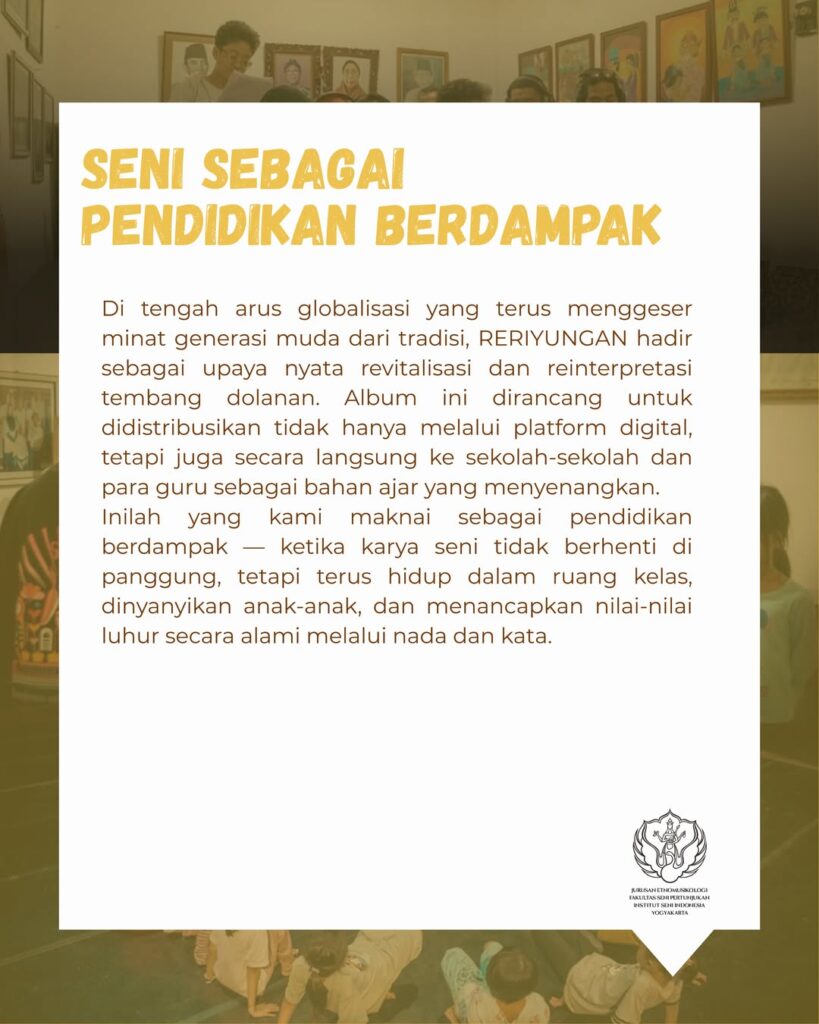
Amidst the currents of globalization that often distance the younger generation from tradition, “Reriyungan” aims to revitalize tembang dolanan so that it remains alive, sung, and recognized by today's children. This album is designed to be distributed through digital platforms and directly introduced to schools and teachers as enjoyable teaching material.
The presence of this work affirms ISI Yogyakarta's position as an art institution that not only preserves tradition but also develops innovation based on knowledge, technology, and social benefits. Through student works such as “Reriyungan,” ISI Yogyakarta demonstrates that art can be an important instrument in impactful education, cultural preservation, and the formation of character-building generations.
As the largest art campus in Indonesia, ISI Yogyakarta continues to foster academic works with broad relevance, both at the local, national, and international levels. “Reriyungan” is proof that art education can produce works rooted in tradition, open to technology, and directly addressing community needs.