

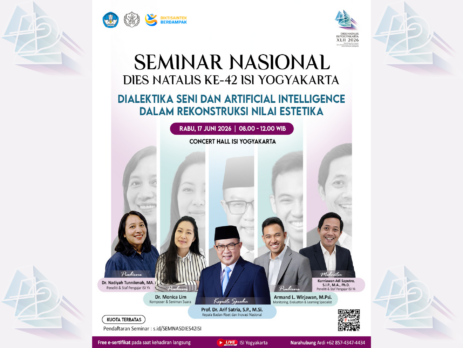
Yogyakarta, June 9, 2026 — The Indonesian Institute of the Arts (ISI) Yogyakarta has once again solidified its position as a leading art institution in Indonesia through the hosting of the 42nd Anniversary National Seminar of ISI Yogyakarta, themed “The Dialectic of Art and Artificial Intelligence in the Reconstruction of Aesthetic Values” to be held on Wednesday, June 17, 2026, from 08:00–12:00 WIB at the Concert Hall of ISI Yogyakarta.
This activity is one of the main academic agendas in the series of the 42nd Dies Natalis of ISI Yogyakarta, which carries the big theme “Redefining Arts Impact: Art, Humanity, and Creativity in the Era of Artificial Intelligence.” The seminar features national and international figures who have strong competencies in the fields of research, art, technology, and public policy.
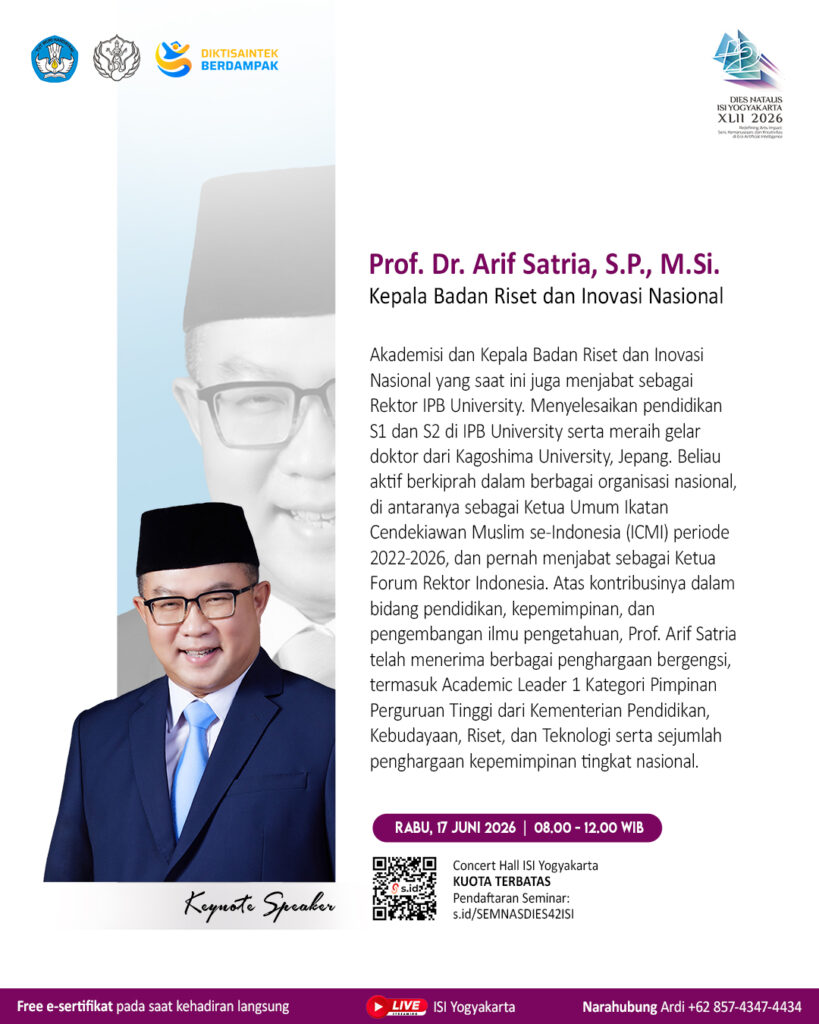
As the keynote speaker, Prof. Dr. Arif Satria, S.P., M.Si., Head of the National Research and Innovation Agency (BRIN), will present a strategic perspective on the transformation of science, innovation, and the challenges of artificial intelligence in national development and the development of a creative ecosystem.
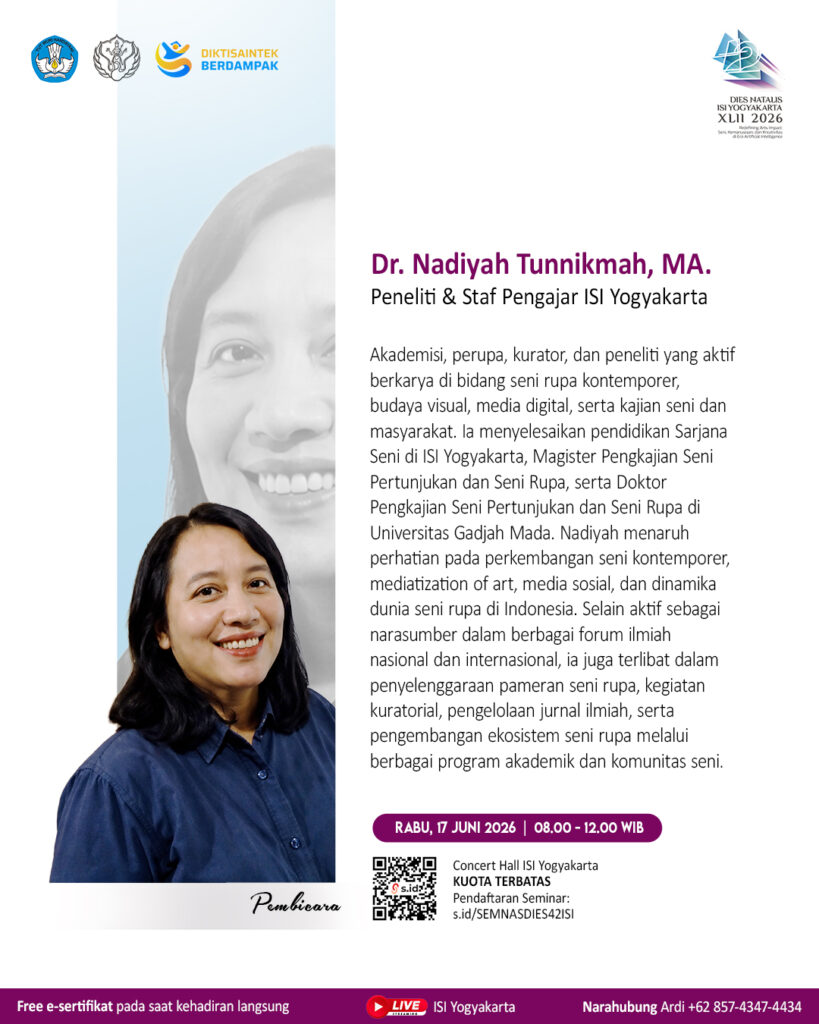
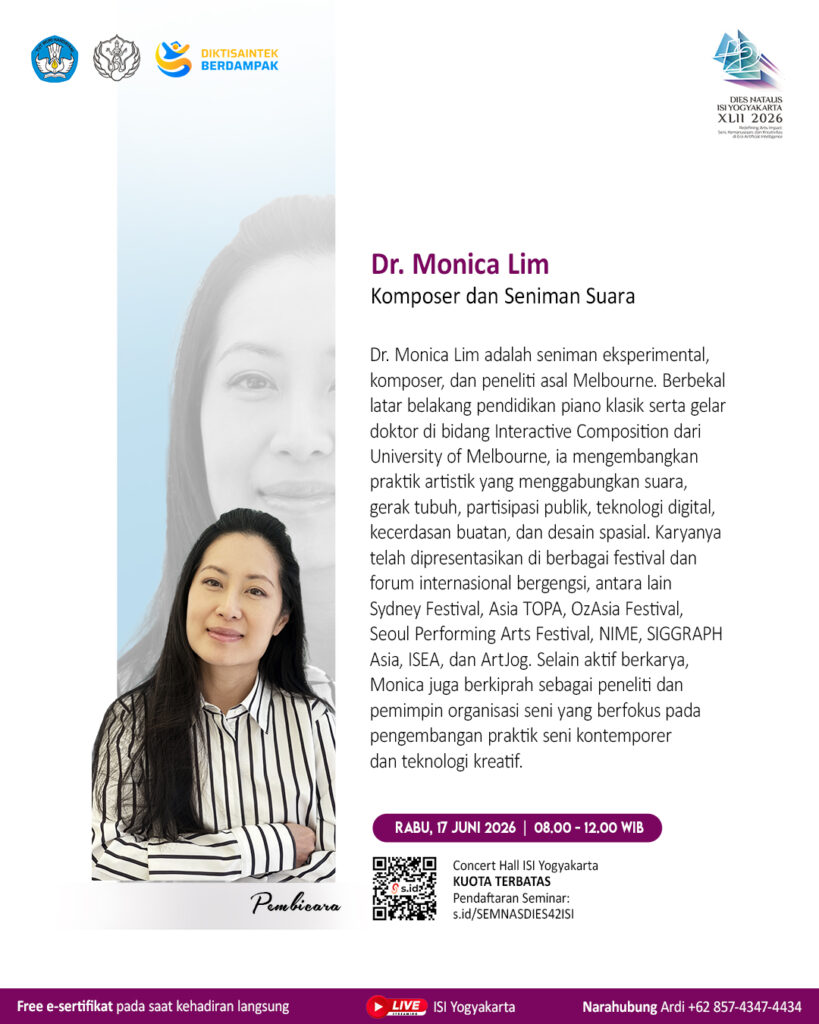
The academic forum also featured Dr. Monica Lim, a composer and sound artist from Australia known for her interdisciplinary artistic practice combining digital technology, artificial intelligence, public participation, and contemporary art. In addition, Dr. Nadiyah Tunnikmah, M.A., a researcher and lecturer at ISI Yogyakarta, who focuses on studies of contemporary art, visual culture, digital media, and Indonesian fine art dynamics, was also present.
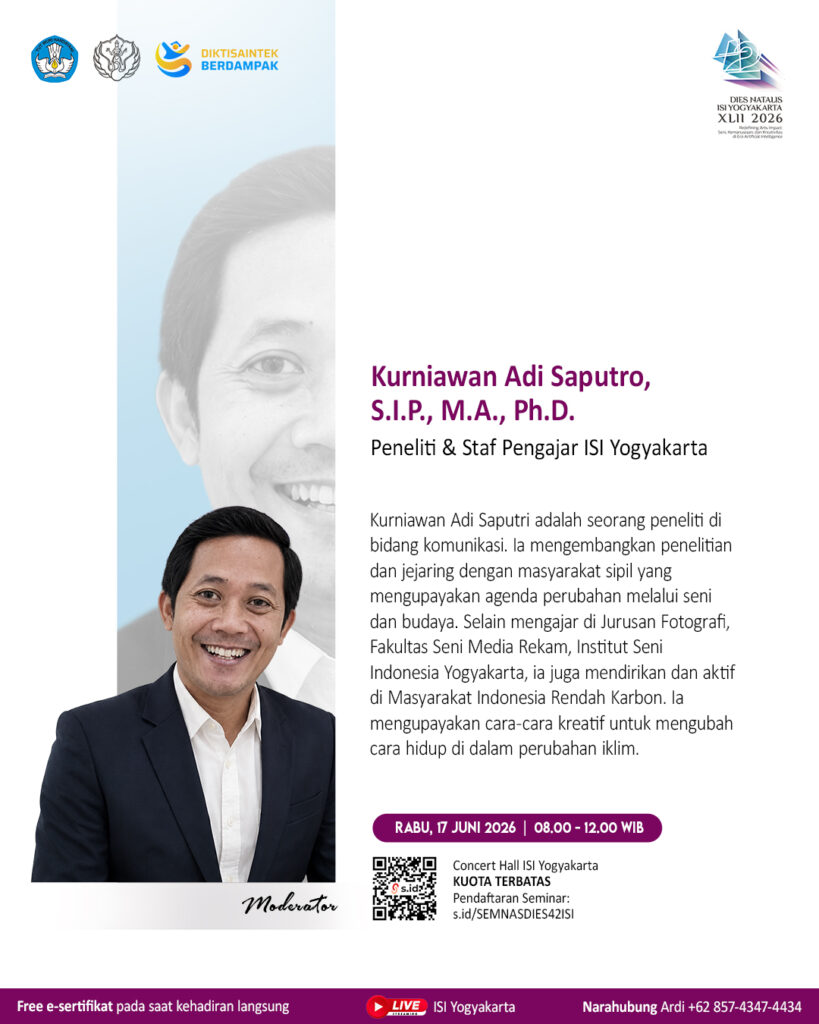
The discussion will be guided by Kurniawan Adi Saputro, S.I.P., M.A., Ph.D., an academic and researcher from ISI Yogyakarta who is actively developing studies on communication, art, culture, and sustainability issues.
The Rector of ISI Yogyakarta, Dr. Irwandi, M.Sn., emphasized that the development of Artificial Intelligence has brought about fundamental changes in how humans create, consume, and interpret works of art. According to him, art universities have a responsibility not only to respond to technological developments but also to become critical spaces that guide these developments to remain grounded in human values.
“The development of AI presents both opportunities and challenges for the art world. Amidst technological acceleration, art remains a space for reflection, empathy, and meaning rooted in human experience. Therefore, an academic dialogue about the relationship between art and AI is crucial for building a future that is not only innovative but also humanistic,” he/she said.
This national seminar is held in response to the increasing use of AI technology in various creative practices. The presence of algorithm-based generative systems allows machines to independently produce visual works, music, text, and other forms of artistic expression. This phenomenon raises various fundamental questions regarding creativity, originality, authorship, and the reconstruction of aesthetic value in the digital era.
Through this seminar, ISI Yogyakarta endeavors to provide an academic space that brings together perspectives from art, technology, research, and humanities to critically examine the development of AI within the cultural and creative ecosystems. This forum also serves as a platform to formulate new understandings regarding the position of humans as creative subjects amidst rapidly advancing technology.
The organization of the national seminar further strengthens ISI Yogyakarta's role as a center of excellence in art education that actively responds to global issues through academic, research, and artistic practice approaches. The presence of the Head of BRIN along with international experts and academics from various fields demonstrates ISI Yogyakarta's capacity in building a strategic dialogue space regarding the future of art and technology in Indonesia.
In the midst of ongoing digital transformation, ISI Yogyakarta reaffirms its commitment to becoming an art higher education institution that not only produces creative works but also births ideas, research, and critical thinking relevant to the development of society, creative industries, and future civilizations.
This national seminar is open to academics, art practitioners, researchers, students, and the general public with limited participant quotas. In addition to gaining insights from the speakers, participants who attend in person will also receive an e-certificate as a form of participation in this prestigious academic forum.