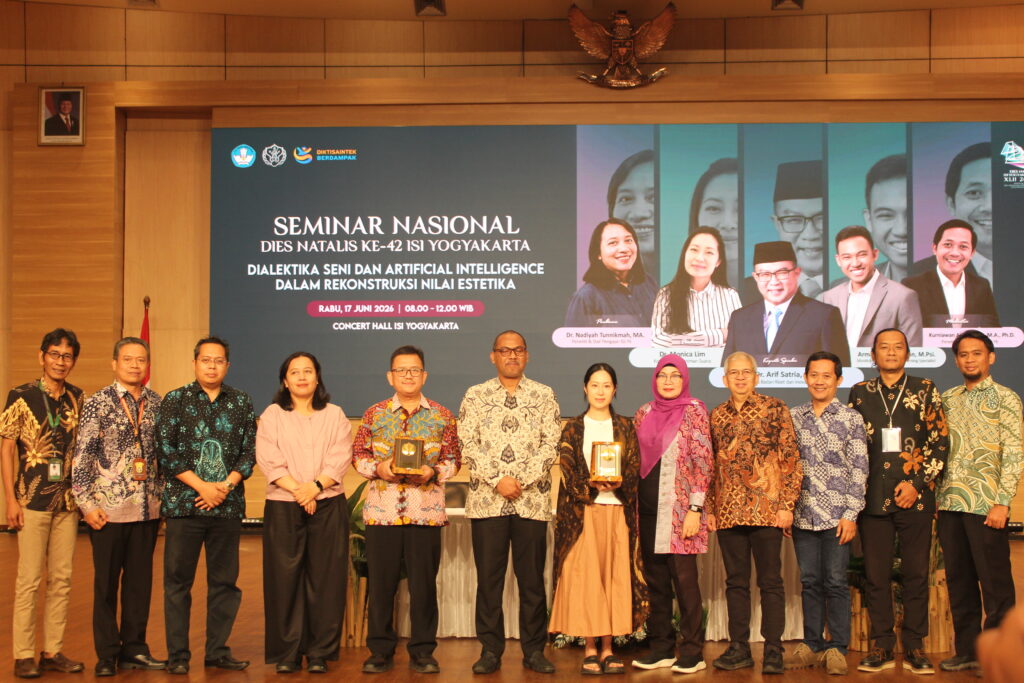


YOGYAKARTA, June 17, 2026 – The Indonesia Institute of the Arts (ISI) Yogyakarta once again affirms its role as an art higher education institution that is responsive to the times through the holding of the XLII Dies Natalis National Seminar titled “Dialectic of Art and Artificial Intelligence in the Reconstruction of Aesthetic Values.” This event serves as a strategic space that brings together perspectives from art, technology, education, and humanity in response to the major transformations brought about by artificial intelligence (AI).
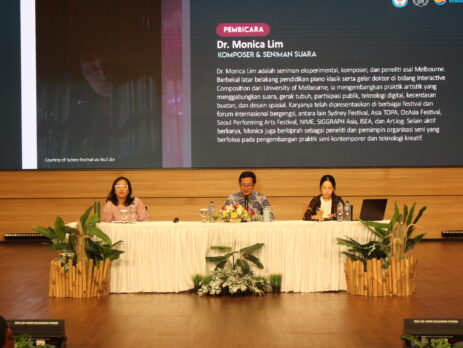
The seminar held at the Concert Hall of ISI Yogyakarta presented a number of national and international class speakers, including the Head of the BRIN Research Organization for Electronics and Informatics, Dr. Eng. Budi Prawara, international academic and digital artist Monica Lim, ASEAN AI development and education expert Armand Wirjawan, and lecturer of the Fine Arts Study Program, FSRD ISI Yogyakarta, Nadiyah Tunnikmah.
The Rector of ISI Yogyakarta, Dr. Irwandi, M.Sn., emphasized in his welcoming remarks that the development of AI should not be viewed solely as a technological challenge, but as an opportunity to strengthen the position of art as a space for reflection, critique, and the interpretation of humanity.
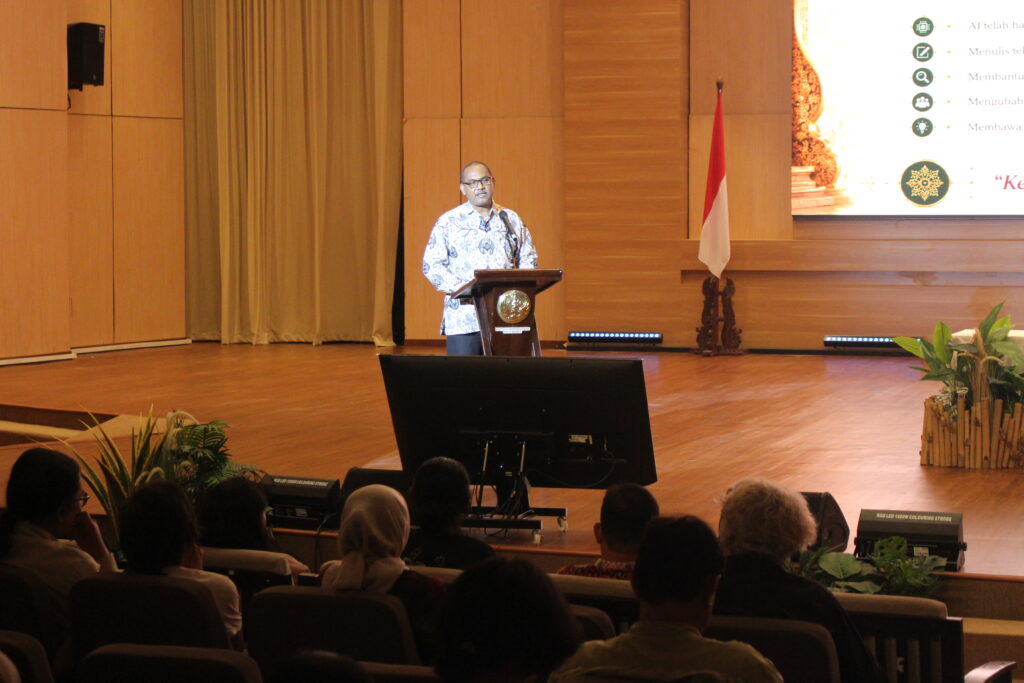
“The development of AI brings fundamental changes to how humans create, learn, and interact. As an art college, ISI Yogyakarta is committed to ensuring that technological advancements go hand-in-hand with humanistic values, creativity, and culture,” he said.
As the keynote speaker, Dr. Eng. Budi Prawara presented various cutting-edge research developments at BRIN in the fields of artificial intelligence, high-performance computing, data science, cybersecurity, and international research collaborations that open up opportunities for cross-disciplinary synergy. The BRIN Research Organization for Electronics and Informatics is currently developing various strategic programs such as AI, Big Data, bioinformatics, autonomous systems, intelligent telecommunications, and advanced computing supported by open research infrastructure for collaboration between universities and industry.
Meanwhile, Monica Lim, through her “The Friction Manifesto” concept, calls on the world of art education not to merely pursue technological efficiency, but to maintain “friction” as an essential element in art creation. According to her, meaningful artworks are born from life experiences, failures, risks, and human involvement that cannot be fully replaced by machines. She emphasizes that the future of art is not a conflict between humans and AI, but rather how the collaboration between the two can still present depth, courage, and the imprint of humanity.
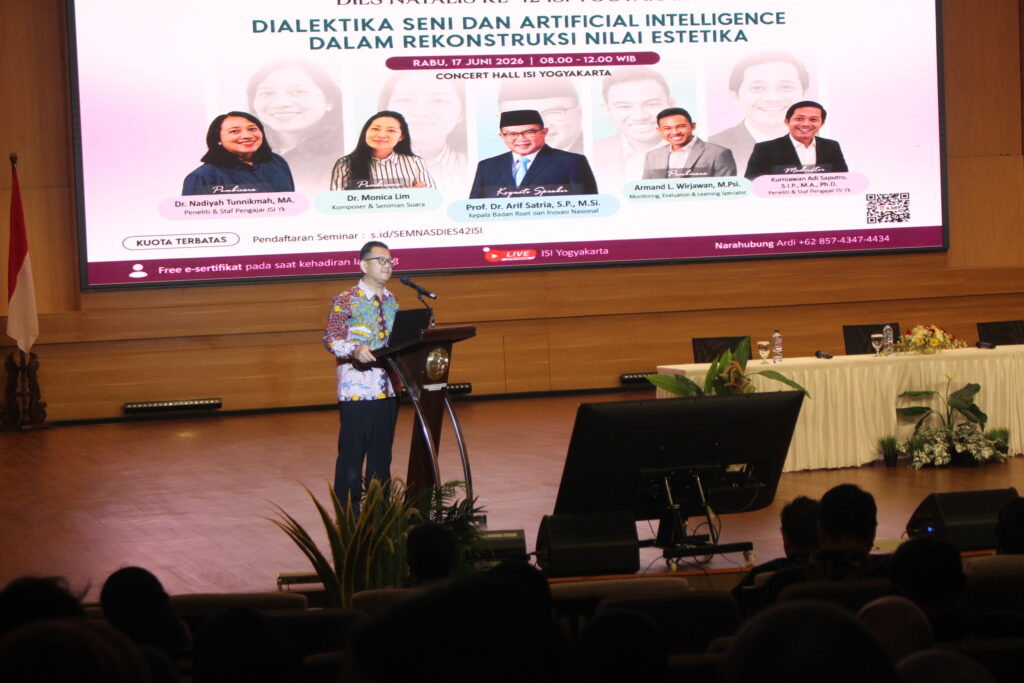
ASEAN's regional perspective was presented by Armand Wirjawan through an explanation of Southeast Asian communities' readiness for the AI era. He revealed that AI adoption is developing very rapidly, while skills readiness remains a major challenge. Therefore, higher education has an important role in building ethical, critical, and inclusive AI literacy so that technology can become an instrument of empowerment, not just a tool for automation.
From a fine arts perspective, Nadiyah Tunnikmah highlights that the acceptance of technology in art is a long process that has been ongoing since the era of computers and digital media. According to her, generative AI is a continuation of that transformation, but the reconstruction of aesthetic values has not yet fully occurred because the aspects of art distribution and consumption are still being negotiated. She emphasizes that awareness, honesty, and responsibility remain the main foundations of artistic practice in the AI era.
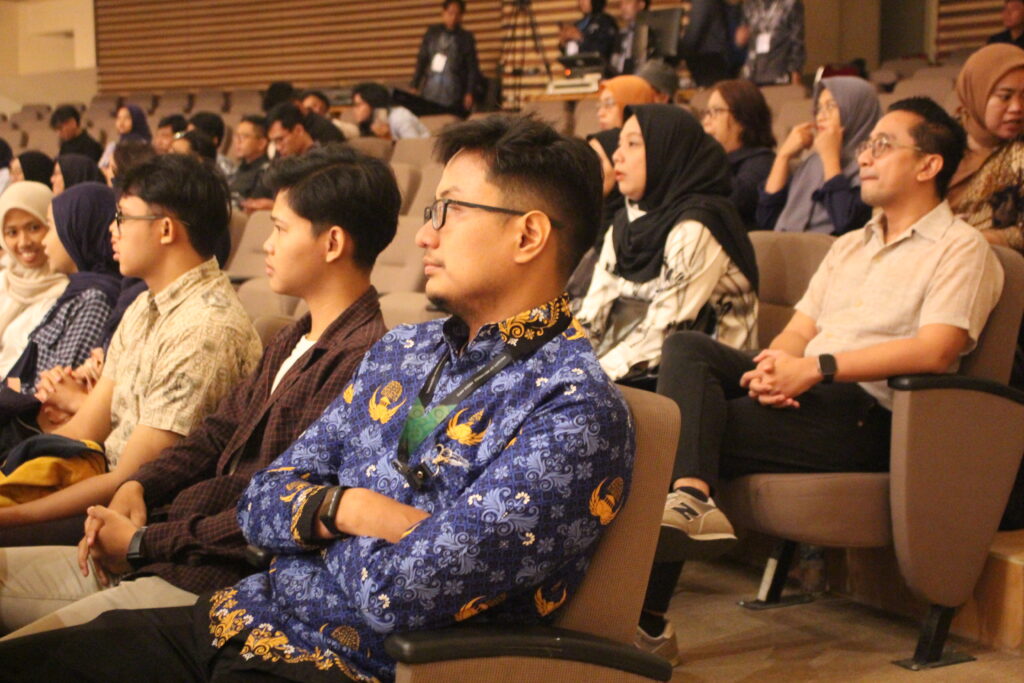
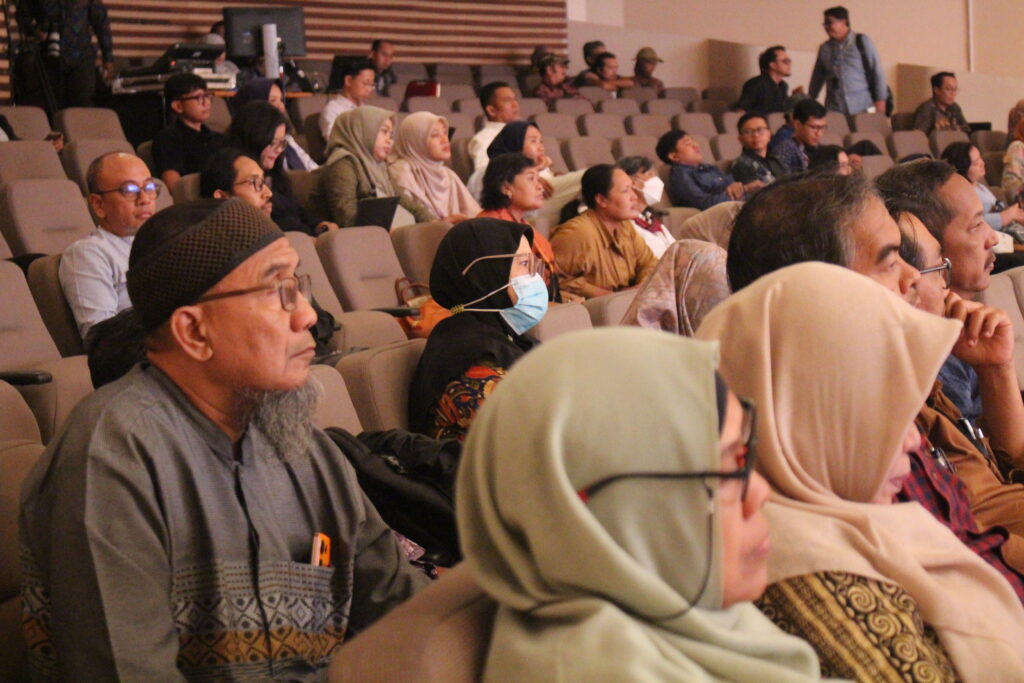
Through this seminar, ISI Yogyakarta demonstrates its capacity as a center for art thinking and development, bridging dialogue between creativity, technology, and humanity. The presence of BRIN researchers, international academics, and ASEAN education experts further strengthens ISI Yogyakarta's position as an art higher education institution actively building a global knowledge network and contributing to the formulation of art's future in the era of artificial intelligence.
This National Seminar for the XLII Dies Natalis is one manifestation of ISI Yogyakarta's commitment to providing an academic space relevant to the times, while also ensuring that art remains a force that humanizes people amidst the rapid technological transformation.