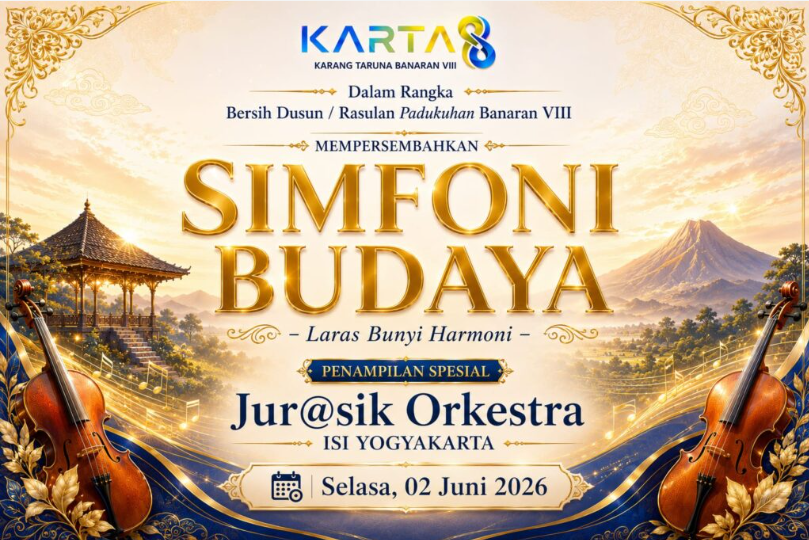


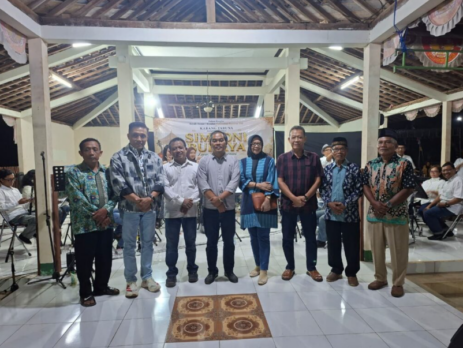
Gunungkidul — The Indonesian Institute of the Arts (ISI) Yogyakarta, through its Faculty of Performing Arts, enlivened the Rasulan or Village Cleansing event in Banaran VIII Hamlet, Playen District, Gunungkidul Regency, on Tuesday (6/2). The involvement of the academic community of ISI Yogyakarta in this event is a tangible manifestation of community service and a space for disseminating the results of performing arts learning to the community.
This activity involves lecturers and students from various study programs within the Faculty of Performing Arts at ISI Yogyakarta. Several participating study programs include the Music Study Program, Bachelor of Music Education, Diploma IV Music Performance, Bachelor of Music Composition, Performing Arts Education Study Program, and Ethnomusicology Study Program. The presence of lecturers and students from ISI Yogyakarta was warmly welcomed by the community who filled the venue of the Rasulan Banaran VIII event.
Rasulan is a tradition of the Gunungkidul community carried out as an expression of gratitude, while also serving as a space for social, cultural, and artistic interaction among village residents. In this context, the presence of ISI Yogyakarta not only presents performances but also strengthens the relationship between the art campus and the community through a living cultural approach that is close to the daily lives of the residents.
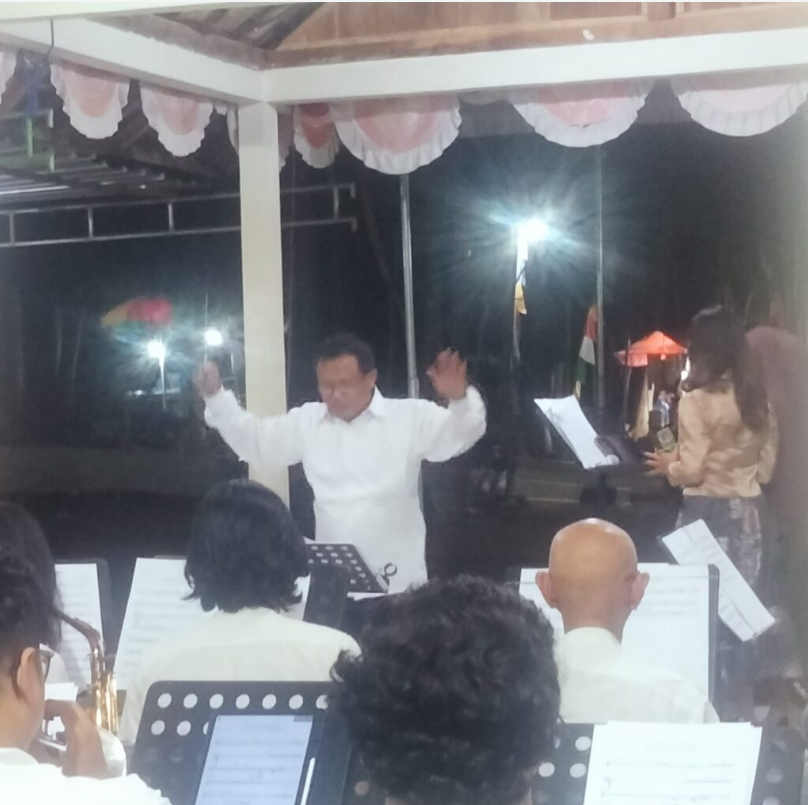
The performance series began with a solo guitar performance by Dwi Hansen, a musician from Ngleri. Through his communicative instrumental presentation, the performance opened the event's atmosphere with a musical nuance familiar to the community. After that, Kustap, S.Sn., M.Sn., a lecturer from the Music Study Program at ISI Yogyakarta, also presented a solo guitar performance that showcased a wealth of musical expression and technique in an artistic performance format.
In addition to musical performances, the Rasulan Banaran VIII event was also enlivened by a Modern Dance performance from students of the Performing Arts Education Study Program. The presence of modern dance in the community's traditional space shows that performing arts can be dynamic, cross-disciplinary, and still grounded in the spirit of togetherness with the community.
On that occasion, the community service team and students from ISI Yogyakarta also performed a number of repertoires that are familiar to the public. Some of the songs performed included “Dari Sabang Sampai Merauke,” “Sinarengan,” “Caping Gunung,” “Kartonyono Medot Janji,” “Rungkad,” “Pantun Janda,” “Iming-iming,” “Juragan Empang,” “Bojo Galak,” “Anak Lanang,” and “Koyo Jogja Istimewa.”.
The diverse repertoire, ranging from national songs, regional songs, to popular Javanese songs, successfully created a festive atmosphere. The attendees also enjoyed the performance and sang along, making the event a space for fluid interaction between the academic community of ISI Yogyakarta and the residents of Banaran VIII.
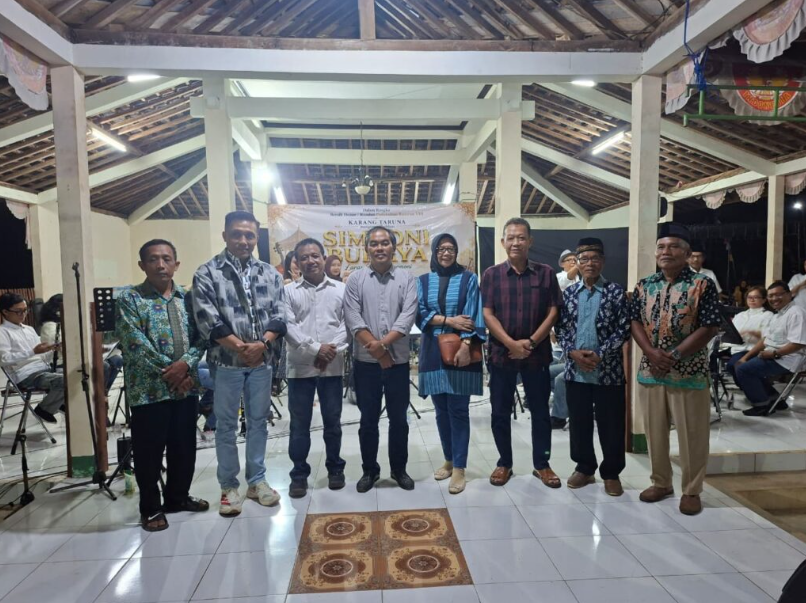
This event was also attended by several figures and stakeholders, including Dukuh Banaran VIII Very, Gunungkidul Regency DPRD Member Ridha Mustofa, Vice Dean III of the ISI Yogyakarta Performing Arts Faculty, Head of the Gunungkidul Regency Education Office Nunuk Setyowati, Parno, a retired employee of the ISI Yogyakarta Library, and the Head of RW Banaran VIII.
Through this activity, ISI Yogyakarta affirms its role as an arts higher education institution that not only conducts education in academic spaces but also actively engages with the community. The involvement of lecturers and students in the Rasulan tradition is part of ISI Yogyakarta's commitment to strengthening art-based service, cultural preservation, and community empowerment through performing arts practices.
The participation of the Faculty of Performing Arts at ISI Yogyakarta in Rasulan Banaran VIII also demonstrates the importance of collaboration across study programs. Through this collaboration, music, dance, art education, and ethnomusicology can converge in a single cultural space, enriching students' learning experiences while directly benefiting the community.
By participating in community cultural activities, ISI Yogyakarta continues to expand its role as a center for art education, creation, research, and service. These activities demonstrate that higher education institutions for the arts hold a strategic position in maintaining the continuity of tradition, fostering creativity, and building productive relationships between science, art, and community social life.